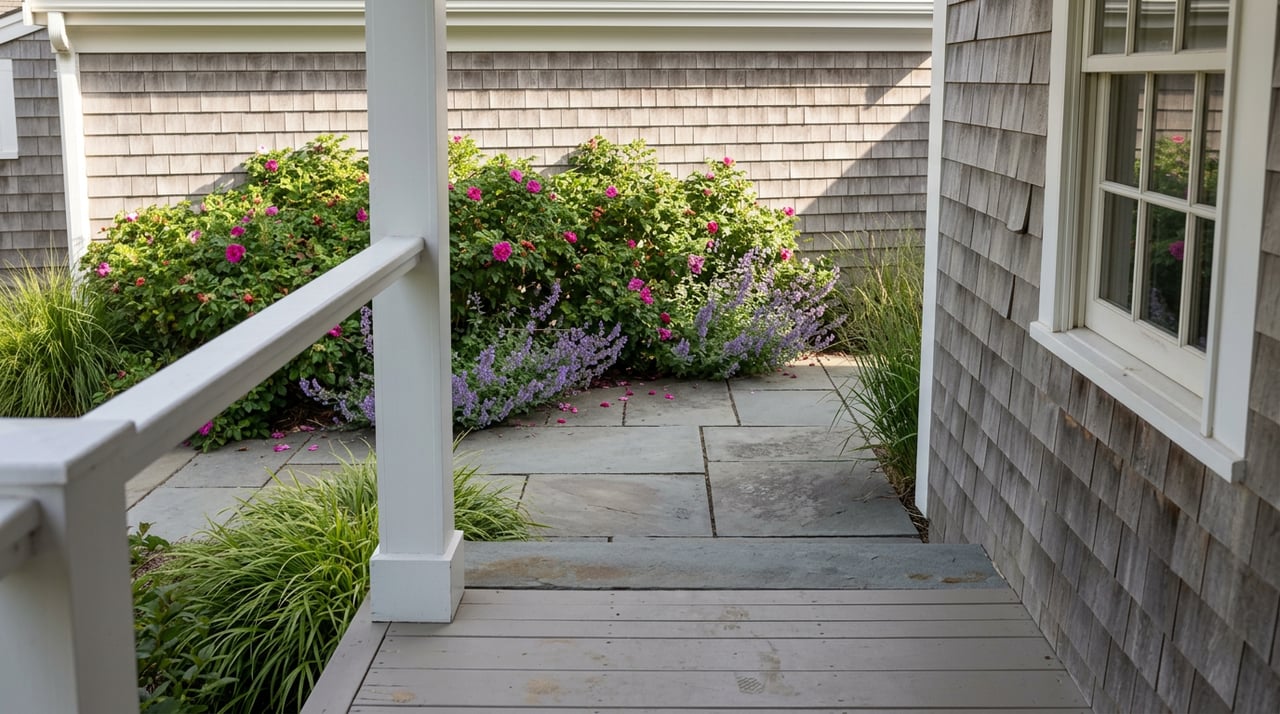
If you own a house between the Metro-North tracks and Southport Harbor, your pre-listing plan has a constraint most sellers outside the district never think about. It is not your contractor's schedule, your stager's calendar, or the appraiser's turnaround. It is the second Thursday of the month at 4:15 p.m.
That is when the Fairfield Historic District Commission meets, and for roughly 150-plus contributing buildings inside the Southport Local Historic District, almost any exterior change visible from a public way needs a Certificate of Appropriateness before a building permit can issue. In a market where 06890 homes are sitting on the market noticeably longer than a year ago, that meeting cadence quietly decides whether your house lists in May or August.
The clock you are actually working against
The commission oversees three districts inside town: Southport, Greenfield Hill, and the Old Post Road district by downtown Fairfield. It sits within the Building Department at 725 Old Post Road and generally meets virtually on the second Thursday of the month at 4:15 pm. Applications for a Certificate of Appropriateness are free, but the filing deadline is not casual. Filings are due at 3:00 p.m. on the Wednesday three weeks and one day prior to the hearing, and public-support letters have their own protocol. They must be mailed to the commission at Sullivan Independence Hall, 725 Old Post Road; emails and hand deliveries are not accepted, and letters must arrive no later than 2:00 p.m. the Wednesday of the week prior to the hearing.
Back-plan from that and the realistic minimum from "we want to repaint the trim and swap the fence" to permit-in-hand is four to six weeks, and that is if the application is complete and uncontested. For a seller targeting a specific listing week, that is the critical path.
Here is what the runway looks like when it is compressed to essentials:
- Week 1: Confirm the parcel is inside the district or is a designated Historic Property, pull the maps at Independence Hall, and scope which proposed work is visible from a public street, way, or place.
- Week 2: Prepare drawings, elevations, product cut sheets, and photographs. Pre-application conversation with the Building Official.
- Week 3: File by the 3:00 p.m. Wednesday deadline.
- Weeks 4 to 6: Public notice, hearing, decision, and only then the building permit.
Miss one Wednesday deadline and you have added a month.
What actually counts as "a change"
The category most sellers underestimate is scope. Connecticut's statute defines a "structure" broadly, and the case law bears out how far that reaches. The handbook uses "buildings and structures" because both terms are defined in state statute, and "structure" means any combination of materials, other than a building, affixed to the land, including but not limited to signs, fences, and walls.
That is not theoretical. In one Connecticut Supreme Court matter arising from a Southport property, the commission successfully argued that a concrete-and-steel-rebar sculpture roughly eighty feet long, exceeding six tons and set on a prepared gravel-and-stone trench, was a "structure" within the meaning of § 7-147a(a) and required a CoA. A separate case, Gibbons, involved the commission's denial of a certificate for the proposed relocation of an existing outbuilding on the ground that the change would damage the historical integrity of Southport Harbor. The trial court reversed on the record, but the point for sellers is unambiguous: the commission has jurisdiction over the yard, the outbuildings, and the sight lines to the harbor, not only the front elevation of the main house.
Recent Southport applications on file give a practical picture of pre-listing scope. One 560 Pequot Avenue submission covered replacing pool-surround bluestone with thermal-select full-color bluestone, replacing a patio off the garage with matching bluestone plus a fieldstone sitting wall and a planting-bed retaining wall, a new patio off the dining room, replacement fencing, and a driveway alteration designed by Will Hibbs at Oliver Nursery. That is the exact bundle of curb-appeal moves a seller might sequence in the eight weeks before a spring listing. Every one of them was in the commission's lane.
Reading the market against the calendar
This is where the calendar meets the pricing story. Southport is still rewarding well-prepared inventory, but it is asking sellers to wait longer for the reward. As of May 2026, Redfin's read on the 06890 zip put the median sale price at roughly $1.3M, down 4.2% year over year, with median price per square foot at $596, up 12.7%. Days on market averaged 77, compared to 34 the same period last year, and sale-to-list ran 104.7%. Individual district-adjacent sales carried the pattern: 276 Flintlock Road closed on June 17, 2026 at $2,505,000 against a $2,100,000 list, 19% over list at 43 days, while 279 Spruce Street, inside the district's northern extension, sold on June 15, 2026 at $1,100,000, 8% under a $1,199,000 list, after 115 days.
Two things follow from that. The per-square-foot appreciation says the market still pays a premium for finish quality and correct presentation. The doubled days-on-market says buyers now have time to scrutinize what the commission has and has not blessed. A seller who lists before completing the CoA process for a visible fence replacement or a garage rebuild is effectively transferring that timeline risk to the buyer, and priced-in caution shows up in the offer.
What buyers' agents will surface in diligence
Here is the second-order effect owners rarely anticipate. A buyer's team working a Southport contract will ask questions that a buyer's team in an inland zip will not. Expect:
- Whether any exterior work done during the seller's ownership was performed under a CoA and closed permits, and whether the finishes on the ground match the approved application.
- Whether the parcel sits inside the 1971 district boundary, the 2007 Spruce Street extension, or is separately listed as a Historic Property by the Representative Town Meeting.
- Whether any open items sit before the commission that a buyer would inherit, and whether pending zoning-variance work is entangled with the CoA. Pre-application discussions on matters that will require a variance from the Zoning Board of Appeals are discouraged, which means the seller often needs to sequence ZBA relief and HDC review carefully rather than in parallel.
- Flood-zone standing for parcels along the harbor and Mill River, which drives elevation and insurance conversations that interact with any exterior alteration the buyer plans post-close.
The clean version of the answer is a binder: application, minutes, CoA, closed permits, and photographs. That binder shortens diligence and, in a 77-day market, that is worth real money.
The thesis in one sentence
Inside the Southport Local Historic District, the binding constraint on your listing date is not construction, it is the second-Thursday calendar and the 3:00 p.m. Wednesday filing deadline that sits three weeks and a day in front of it. Sellers who back-plan from the hearing win the spring or fall window. Sellers who plan from the contractor's start date lose it.
FAQ
Is my house actually in the district? The commission's jurisdiction runs to properties inside the mapped Southport Local Historic District, the 2007 Spruce Street extension, and separately designated Historic Properties. Maps are online at Fairfieldct.org/hdc and at the Building Department counter in Independence Hall. Confirm before you commission drawings.
Does interior work need a CoA? No. The commission's review authority is exterior changes visible from a public street, way, or place, including exterior architectural features and site structures like fences and walls. Interior renovations proceed on the standard building-permit track.
Can I list while an application is pending? Yes, and many sellers do. The disclosure question is what a buyer will ask about status and outcome. Listing before the hearing puts that answer in the buyer's hands rather than yours.
What about the Old Mill or the pre-Revolutionary homes near the harbor? Pre-Revolutionary War buildings inside the district include the Old Mill at 95 Harbor Road, the Samuel Bradley house at 450 Harbor Road, and the William Bulkley house at 824 Harbor Road; the Old Mill dates from about 1722 and sits at the entrance to the historic district. For any home of that age or standing, expect the commission to scrutinize material choices at a level of detail that requires early conversations, not late ones.
If you own inside the district and are thinking about a 2026 or early 2027 sale, the pre-listing plan should be built around the commission's calendar first and the contractor's calendar second. That is the sequence that protects your price. To talk through timing, scope, and what a specific parcel realistically supports at today's Southport pace, Lisa Babington is happy to walk the property with you. Work With Lisa.